01
A system instead of spreadsheets
Data lives in one shared source of truth instead of disconnected files.
WorkGrid was built for small and medium businesses that outgrew spreadsheets, paper-based administration, and fragmented internal records. Inventory, partners, suppliers, tasks, and approvals live inside one customizable online system.
Modularity
Custom modules and expandable workflow logic.
Access
Web-based access, roles, and cleaner permission layers.
Rollout
Discovery, prototype, training, and iterative support.
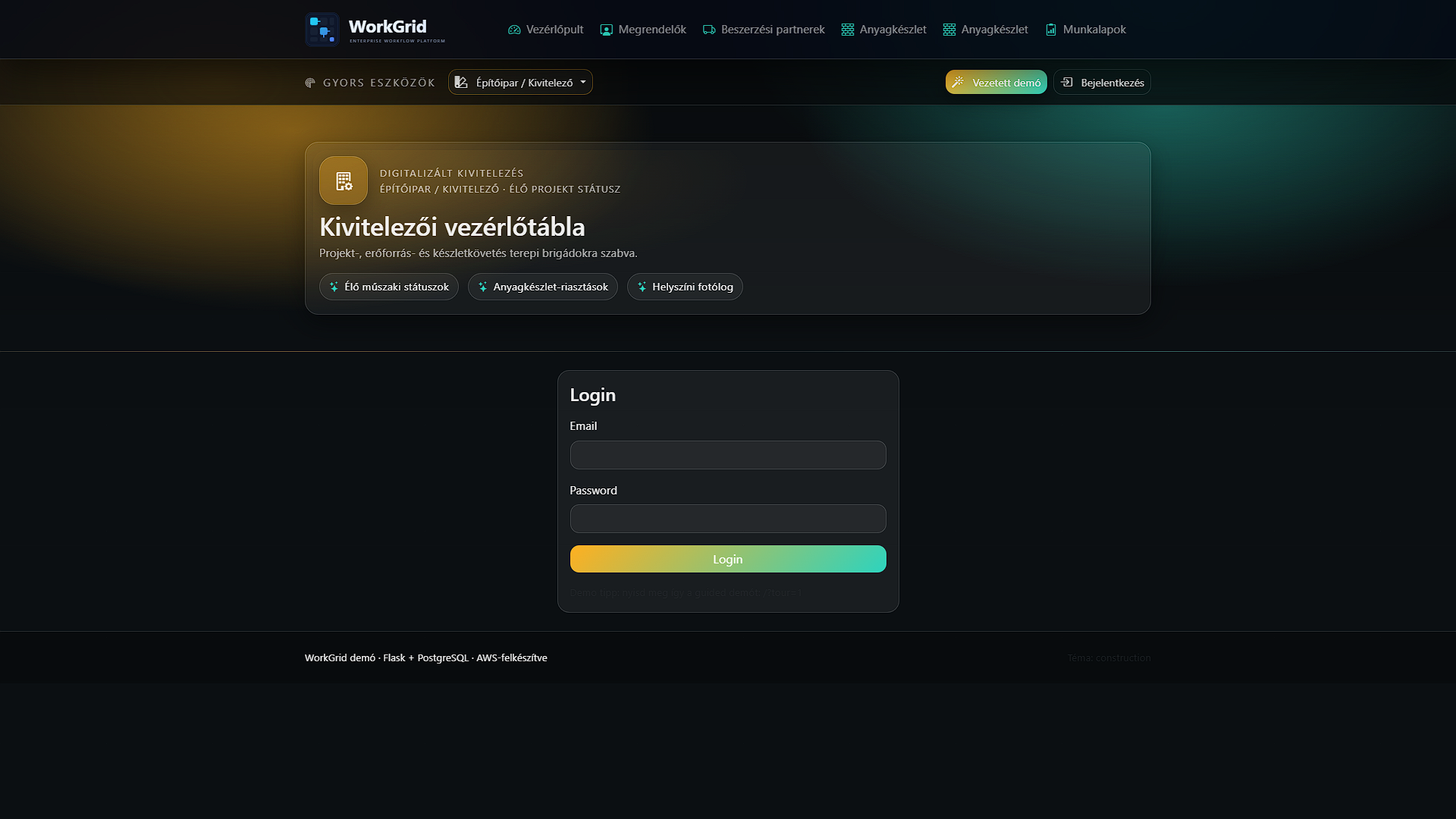
Public demo entry view
Partner
Central view
Workflow
Trackable statuses
Control
Less information loss
What problem does it solve?
01
Data lives in one shared source of truth instead of disconnected files.
02
Tasks, approvals, and statuses remain visible and searchable.
03
Inventory, partners, suppliers, and workflows connect inside one view.
04
The system adapts to the company instead of forcing the company into rigid software.
Why is it different?
WorkGrid is not boxed ERP software pushed onto the client. It is an in-house operational foundation that can be shaped around your team, roles, and workflow logic.
WorkGrid brand note
That is why it can be sold as a product while also proving real systems design and software delivery capability under the Coding Bear Studio brand.
Each role sees and owns the parts that belong to it.
Approvals, statuses, and internal handoffs stop disappearing in side channels.
Stock movement, supplier context, and partner history live inside the same system.
You do not need to replace everything at once. The system can grow module by module.
Core modules
Modular structure so the system can be introduced gradually, not all at once.
Stock movements, availability, internal items, and core item data.
Contacts, supplier relationships, and partner history with operational context.
Statuses, ownership, approvals, and team-level task tracking.
Role-based access, filtered views, and reporting for day-to-day decisions.
Who is it for?
WorkGrid is not locked into a single vertical. It becomes valuable where daily operational load, multiple internal roles, and moving information already create friction.
Inventory, partner data, suppliers, and recurring operational tasks in one place.
Tasks, ownership, statuses, and customer-facing follow-up become easier to track.
Material flow, supplier dependency, and internal handoffs become cleaner to manage.
Permissions, approvals, responsibility, and reporting can be structured more clearly.
Rollout process
01
We map the current workflow, identify where information gets blocked or lost, and define the first layer worth fixing.
02
The necessary WorkGrid modules are assembled first, then roles, permissions, and flow logic are shaped around the team.
03
After launch the work continues with training, iteration, and further improvements as the company matures.
WorkGrid by Coding Bear Studio
WorkGrid becomes valuable when you are not looking for a feature checklist, but for a system aligned to your team rhythm, decision points, approvals, and daily operational flow.
Best fit if
multiple people, processes, and data sources are already pulling operations out of sync.
Outcome
Clearer ownership, trackable statuses, and faster visibility across day-to-day operations.
Next step
The first call is not there to push a product. It is there to clarify whether you actually need it, which modules should come first, and how the system should be positioned either as an internal platform or as a sellable brand.
We review the current workflow and identify the biggest operational friction points.
We define the starting modules and the smallest viable rollout version.
Loading Coding Bear Studio...